What Is Gorongosa National Park?
Gorongosa National Park is a 4,000 square kilometer protected area in central Mozambique, sitting right at the southern end of the East African Rift Valley. Before the country’s civil war, it was widely considered one of the finest game parks in the entire world. It was once dense with lions, elephants, buffalo, and hippos, all supported by the extraordinary biodiversity of the Rift Valley.
However, the war essentially gutted the park. Wildlife was hunted for food and to fund fighting factions, and by the early 1990s, roughly 90 percent of the large mammal population had vanished. What happened next is the story really worth telling. When we are designing a journey through Mozambique, we make sure our clients understand that they aren’t just visiting a park; they are witnessing a resurrection.
The Comeback: How Gorongosa Was Rebuilt
In 2008, the Mozambican government partnered with the Carr Foundation to begin a massive, long-term restoration project. It is now cited among the great conservation success stories Africa has produced in the last two decades. The goal was never just to reintroduce animals; it was to rebuild an entire ecosystem while improving the lives of the 200,000 people living in the buffer zone.
The results on the ground have been staggering. Hundreds of buffalo, wildebeest, and zebra have been relocated from other parks, and the lion population has grown from near-zero to over a hundred individuals. The project has also planted over three million trees and built schools and clinics for the surrounding communities. This holistic approach is a big part of why our approach to travel focuses on projects that give back to the land and its people.
Mozambique Wildlife: What You’ll Actually See
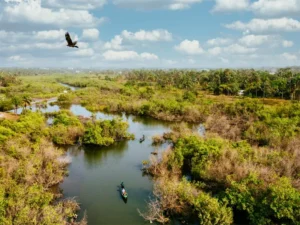
The geography of the Rift Valley creates a mosaic of habitats, including floodplains, montane forests, and the vast Urema Lake system. This supports an unusual range of species in a relatively compact area.
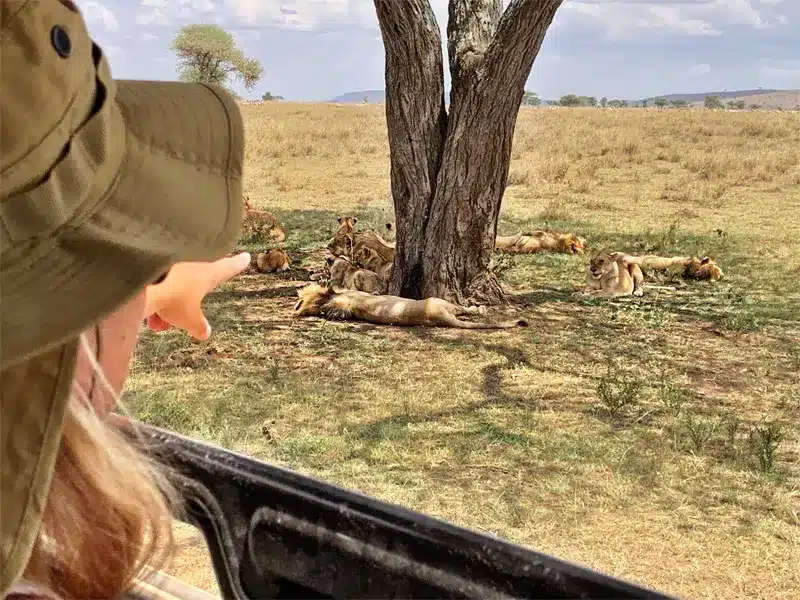
You can reliably see lions on the floodplains, hippos in the river channels, and a bird population that exceeds 500 species. The elephant population deserves a special mention here. Gorongosa’s elephants carry the trauma of the war in their behavior, as the older individuals that lived through the hunting era remain noticeably wary of humans. On a game drive, a guide who understands this specific context changes everything about how you read the movements of the herd. This is the level of depth we look for when exploring different African destinations.
Visiting for Science and Safari
Most parks tend to separate the science from the guest experience, but Gorongosa does things differently. The park runs an active research station where visitors can engage with ongoing field work. Depending on when you visit, you might join a researcher-led walking safari focused on ecology or visit the predator station to see how lion movements are monitored.
This is a park that rewards curiosity. If your idea of a great safari day includes understanding the “why” behind what you’re seeing, Gorongosa delivers that at a level few other parks can match. We often suggest this as a core component when building a custom travel itinerary for those who want a deeper connection to the wild.
The Perfect Mozambique Bush-to-Beach Structure
Gorongosa isn’t a place you visit in a vacuum. To really let the experience breathe, we suggest a structure that combines the rugged interior with the white sands of the coast.
- The Park Stay: Spend four nights at Chitengo Camp. This gives you enough time to do the game drives, join the researchers, and understand the recovery story without feeling rushed.
- The Coast Extension: From the park, it is a relatively easy transfer to Vilanculos or the Bazaruto Archipelago.
This sequence allows you to process the intensity of the conservation story before relaxing by the Indian Ocean. We find that beach and coastal extensions are the best way to end a trip that involves so much emotional and intellectual engagement.
Witnessing the Story in Progress
Gorongosa isn’t a finished product yet, and that is exactly the point. You are visiting a park in the middle of a comeback, at a moment when the story is still being written. Watching the lions return to the floodplains and the elephants rebuild their social structures is a powerful experience that makes the outside world feel very far away. It is the difference between visiting a museum and watching a masterpiece being painted in real time.
We have spent enough time in these floodplains to know the right guides and the best moments to be on the water. If you want to see one of Africa’s most remarkable recovery stories for yourself, get in touch with our team and we can start mapping out that journey for you.