What Exactly Is the Shoebill Stork?
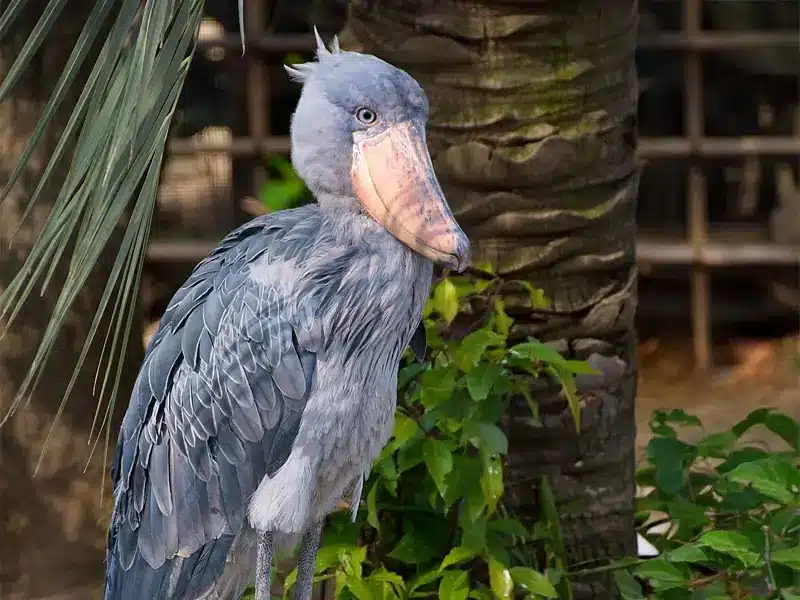
The shoebill, known scientifically as Balaeniceps rex, is a massive and prehistoric looking waterbird that stands up to 1.5 meters tall. It carries a heavy bill the size and shape of a large Dutch clog, which is where it gets its name. It doesn’t really look like it belongs in the modern world, and evolutionarily speaking, it barely does. While its closest living relatives are pelicans and herons, the shoebill looks like a relic from a different age entirely.
It moves with near total stillness, often standing motionless in shallow water for thirty minutes at a stretch while waiting to strike at lungfish with a sudden and violent lunge. When it finally does move, it moves remarkably fast. The rest of the time, it just stares. That stare is the thing people remember most. It looks directly at you with an expression that suggests it has seen entire geological epochs come and go and remains deeply unimpressed by your presence. This unique encounter is a major reason why we suggest exploring the wetlands of Uganda during your visit.
Where to See the Shoebill in Uganda
The shoebill is found across a narrow band of central African swamps, stretching from Sudan and South Sudan down through Uganda and into the DRC. Uganda currently holds one of the healthiest and most protected populations on the continent. Key sighting spots include:
- Mabamba Swamp: This is the most accessible and most reliable spot by far.
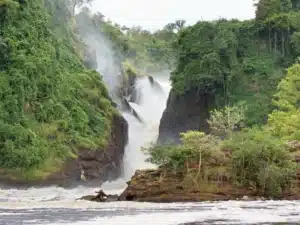
- Murchison Falls National Park: Specifically the delta area where the Nile meets Lake Albert.
- Ziwa Rhino Sanctuary: The surrounding wetlands offer excellent secondary sightings.
- Semuliki Wildlife Reserve: A more remote but beautiful alternative.
Of all these locations, Mabamba is where you should go if you want a near guaranteed sighting with minimal travel effort. It sits on the northern shore of Lake Victoria, about 35 kilometers from Entebbe, which means it works perfectly as a half day addition before or after a long flight. This accessibility is a key factor when we look at various African destinations for our clients.
The Mabamba Swamp Tour: What Actually Happens
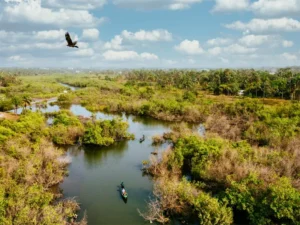
The Mabamba Swamp tour is conducted entirely by wooden canoe. There are no motorboats allowed here because the papyrus channels are too narrow and the noise would scatter the wildlife. You sit low in a traditional dugout while a local guide paddles through a maze of reeds in near total silence.
The swamp is incredibly dense, and the channels open and close depending on the season. Your guide navigates entirely from memory. You’ll hear the calls of other waterbirds, such as the malachite kingfisher or the African pygmy goose, before you see anything else.
Then someone spots it. The shoebill is almost always found standing completely still in the shallow papyrus. Your guide maneuvers the canoe to within ten or fifteen meters, and then you just sit there together. The bird looks at you and you look at the bird. It doesn’t flinch or move; it simply holds your gaze with a calm, prehistoric authority. This is the kind of stillness we try to build into every custom-built African itinerary we create.
Birding in Uganda: More Than Just the Shoebill
For serious birders, Uganda is one of the top destinations on the planet, and Mabamba is just the starting point. Birding here covers over 1,060 recorded species, placing it among the highest bird diversities on the continent relative to its size.
Even if you aren’t a dedicated birder, the diversity is hard to ignore. Clients who visit primarily for the gorillas almost always come back talking about the incredible colors and sounds they encountered on the way to the forest. Understanding these local nuances is a big part of why our approach to travel focuses on more than just the “Big Five.”
Adding a Mabamba Day to Your Entebbe Itinerary
Most Uganda journeys route through Entebbe at the start or end of the trip because that is where the international airport is located. Since Mabamba is so close, it can easily be fit into a morning before an internal flight or as a relaxing activity on your final day before departing.
The canoe trip itself runs about two to three hours. When you add forty five minutes each way for the drive, you are looking at a half day commitment that provides one of the most viscerally striking wildlife encounters in Africa. It is the kind of animal that rewires your sense of what a bird is supposed to look like.
Ready to meet the most prehistoric bird in the wild? You can reach out to our planning team whenever you are ready to add Mabamba Swamp to your Uganda adventure.