The Graveyard of the Atlantic
For centuries, sailors and explorers spoke of this stretch of the Namibian coast with a certain kind of dread. Thick fog, heavy surf, and shifting sandbanks created a natural trap that few could ever hope to escape once they got too close. Today, the rusted remains of these ships still sit on the beaches, slowly being swallowed by the shifting dunes. You might see the ribs of an old vessel or even the bleached bones of a whale. It’s a stark reminder of why the Bushmen called this area “The Land God Made in Anger.”
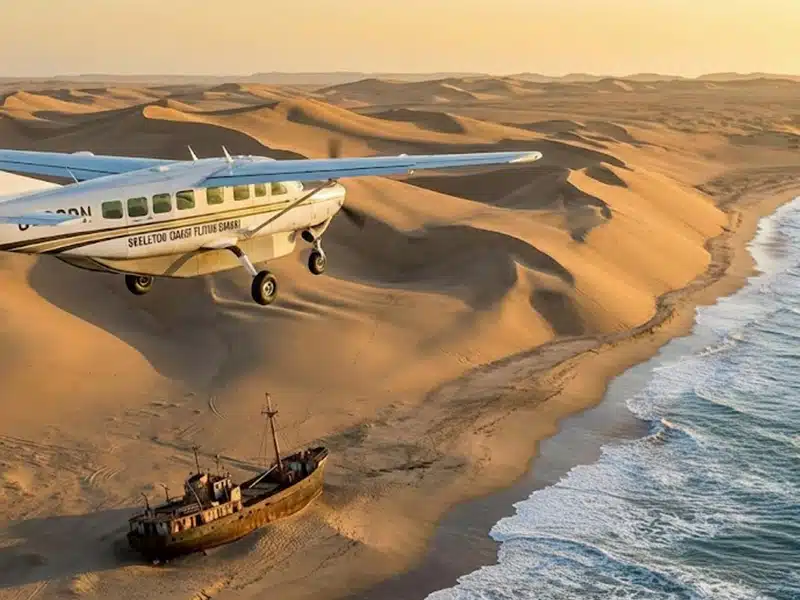
For a busy professional, the sight of a massive steel hull like the Eduard Bohlen sitting half-buried in the sand is a powerful image. It sits miles from the water now, stranded by the moving desert. This image reminds you of the raw strength of nature and the steady, indifferent passage of time. There are no roads here, no cell service, and absolutely no noise other than the wind and the waves. It is a place of quiet beauty that makes the stress of a daily schedule feel distant and remarkably small. When we are designing a custom safari through Namibia, this is exactly the sense of scale we aim for.
The Contrast of Dunes and Rusted Steel
The beauty of the Skeleton Coast lies in its impossible, jarring contrasts. On one side, you have the cold, grey Atlantic and the Benguela Current; on the other, the burning orange and apricot dunes of the Namib. This is a landscape that, by all accounts, shouldn’t exist. It feels like two different worlds colliding at the edge of the continent.
A Skeleton Coast flying safari is really the only way to grasp this scale because from the ground, you only see a fraction of the story. From the air, you see the intricate patterns the wind carves into the sand and the white foam of the waves hitting the shore. You can spot shipwrecks that are actually miles from the water today, as the desert has literally pushed the ocean back over the decades. This visual perspective provides a total mental reset. It pulls your focus away from your inbox and forces you to look at the vastness of the Earth. We often explain how these flights fit into a carefully tailored travel itinerary to ensure you see the most dramatic coastal sections without feeling rushed.
From Swakopmund to the Hoanib Valley
Your journey usually begins with a flight heading north from Swakopmund, leaving the salt pans and the last signs of town behind. As you move deeper into the Skeleton Coast, the landscape becomes even more rugged and the colors start to shift into deeper ochres. You leave the coast eventually and head inland into the territory of the desert-adapted wildlife.
One of the most incredible stops we recommend is a stay in the Hoanib Valley. This area is home to elephants, giraffes, and even desert lions that have learned to survive in a place with almost no standing water. They have adapted to lick the moisture off the rocks from the morning fog. Seeing a desert elephant walking against a backdrop of massive, thousand foot sand dunes is a sight you simply won’t find anywhere else in Africa. It is quiet, intense, and deeply moving. It makes you realize how little life actually needs to thrive if it’s resilient enough.
The Ultimate Isolation
Why do we send our clients here? Because in a world where everyone is connected 24/7, true isolation is the rarest luxury you can find. The Skeleton Coast offers a chance to be somewhere that feels truly empty, in the best way possible. There is no light pollution, meaning the night sky is so bright it almost looks like it’s vibrating.
The lodges here are designed to be light on the land but high on comfort. You have a warm bed, a private deck, and world-class food, but you are hundreds of miles from the nearest town. It is the perfect environment for Jonathan and Emily to finally turn off their phones and just listen to the wind. This philosophy of finding the edge of the world is a big part of why our approach to travel focuses so heavily on these remote, untouched corners.
Let Us Navigate the Fog
Planning a flying safari in Namibia involves complex flight paths and seasonal weather patterns that change by the hour. The fog can be tricky for pilots who aren’t local, and the distances are far greater than they look on a map. We handle all the logistics, from the private charter planes to the lodge bookings in the most remote valleys.
We make sure your pilot is experienced in the local conditions and your plan is timed to give you the best light for photography and the most peaceful experience on the ground. We don’t just book rooms; we curate the flow of the entire journey so you don’t have to think about a thing once you land.
Ready to fly over the edge of the world? You can get in touch with our team whenever you are ready to start designing your custom Skeleton Coast adventure.